Albemarle’s 30-Day Comment Period is Now Closed
Virginia’s DEQ has accepted public comments about this permit, VPA01587, from Aug 25 to Sept 24, 2026. To learn more about the comment submission process, visit our page: Add Your Voice . We’re hopeful that there are enough comments submitted for DEQ to grant a Public Hearing. As we learn more, we’ll share that news here and via our newsletters.
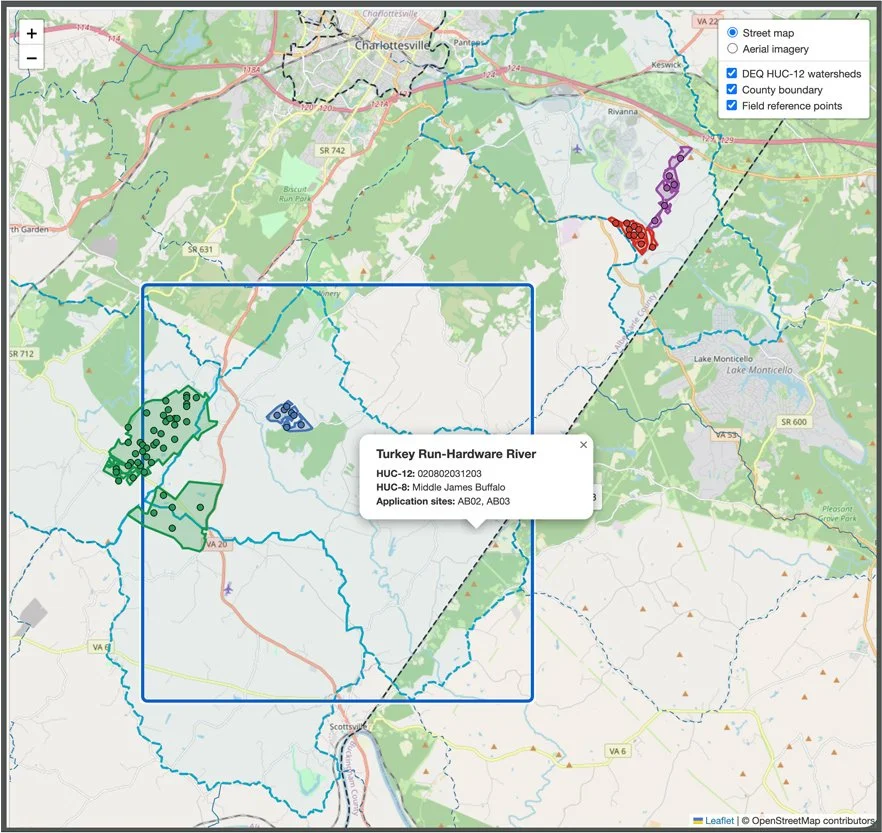
We have a new, interactive map to share, contributed by a supporter of Don’t Spread On Me. It combines detailed maps of the properties on this Albemarle permit application with an overlay of watersheds, so you can easily see how spreading might affect surface waters. To explore it for yourself, click on the image or click here.
Stay in Touch and in The Loop
If you haven’t signed up for our email list already, please fill out the form on our Contact page and be sure to check the circle that says “Sign up for news and updates,” beneath the email address field.
A big thank you goes to everyone who submitted a comment and who showed up for the first step in the process: DEQ’s public information meeting, held June 1st in Charlottesville. As of June 27th, four of the landowners have removed their properties from the permit. Four remain on it.
See the updated public notice and access the permit files at the VPA public notice page of DEQ’s website. Learn more about the permit application process and where the sewage sludge comes from on our Albemarle County page and our page for adjacent property owners.

Biosolids = Treated Sewage Sludge.
“Biosolids” is the industry term for treated sewage sludge from wastewater treatment plants. Sewage sludge has been proven to contain “forever chemicals” and loads of other toxins, yet it is still being spread as fertilizer on farmland in Virginia. We’re a grassroots group in Albemarle County working to change this practice and educate people about it.
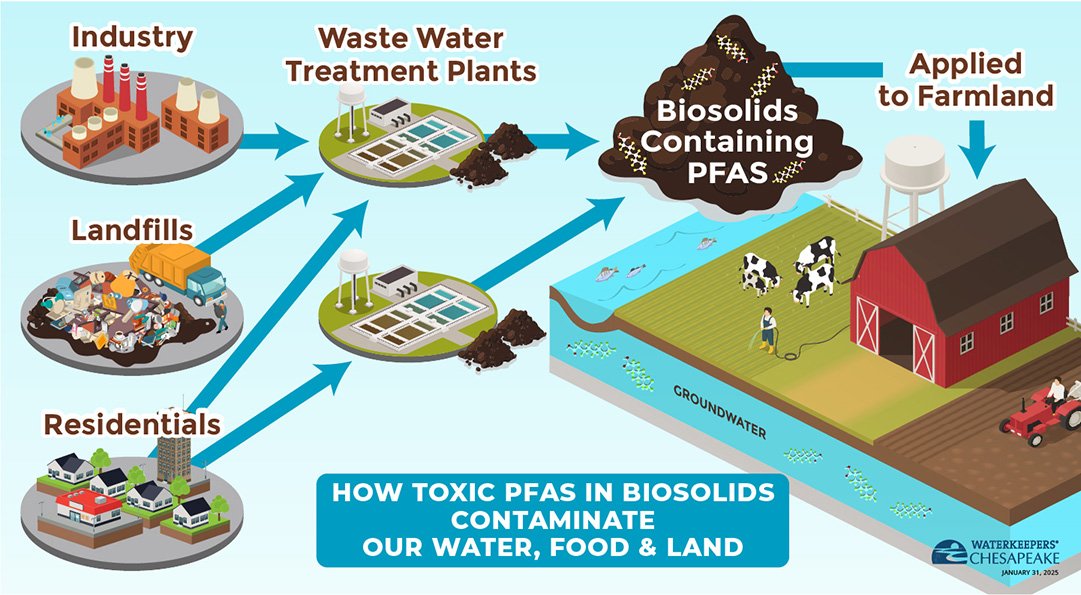
Graphic by Waterkeepers Chesapeake
The Flawed Argument
There’s a lot of money to be made in the sewage sludge business. That’s why you’ll hear industry proponents always say, “PFAS are everywhere and in everything! You should worry about the PFAS in house dust, not the PFAS in biosolids!”
But that PFAS in your house, and in you, and in everything else will eventually end up in a landfill or washed down the drain to wastewater treatment plants. PFAS-contaminated leachate from landfills is trucked to those same wastewater treatment plants. It all ends up concentrated in the sewage sludge (“biosolids”) that gets spread onto farms.
From there, PFAS enters the food chain by crops taking it up and humans or livestock eating those crops. It also enters the air, seeps into groundwater, and washes into surface water and onto neighboring lands.
Saying that PFAS are everywhere and in everything is not a good argument for continuing to spread biosolids.
It’s a good argument for stopping.

